Are you a dedicated grand strategy or simulation gamer frustrated by late-game slowdowns and mod conflicts in your favorite Paradox titles? Discover how a custom-built Paradox Customs PC can transform your gaming experience. This comprehensive guide delves into optimizing hardware specifically for CPU-intensive games like Stellaris, Crusader Kings, and Cities: Skylines, ensuring smooth performance even with extensive mods and massive save files. We'll cover essential components, crucial optimization tips, budget-friendly build strategies, and how to balance your passion for gaming with real-life commitments. For US gamers averaging 10+ hours a week, a tailored Paradox Customs PC isn't just an upgrade—it's an investment in uninterrupted fun and strategic mastery. Learn to overcome common pain points like setup issues and performance bottlenecks, making every gaming session count. Stay current with trends and unlock the full potential of your Paradox gaming library without breaking the bank or sacrificing precious family time.
Related games- Guide: Are Roblox Servers Working Now? Check Current Status
- Guide to Dogwifhat Roblox Unlocking WIF on Blox
- GTA Online Money Guide Top Methods 2026 Pro Tips
- Guide Why Roblox Keeps Crashing & How to Fix It
- Guide How to Adjust NVIDIA Control Panel for Gaming
What makes a PC specifically a 'Paradox Customs PC'?
A Paradox Customs PC is distinguished by its primary focus on components that excel in handling the unique demands of Paradox Interactive's grand strategy and simulation games. This means prioritizing a high-performance CPU with strong single-core clock speeds, ample and fast RAM (typically 32GB+ DDR4/DDR5), and rapid NVMe SSD storage. Unlike typical gaming PCs that might over-emphasize a top-tier GPU, a Paradox Customs PC allocates its resources to the computational power needed for complex AI, vast simulations, and extensive modding, which are the hallmarks of titles like Stellaris or Crusader Kings.
How important is CPU single-core performance for Paradox games?
CPU single-core performance is paramount for Paradox games. These titles, especially grand strategy and city builders, are inherently CPU-bound. Their game engines often rely heavily on a single or a few core threads for calculating complex AI, simulating vast economies, and processing thousands of units or citizens. A high-frequency CPU with strong single-core capabilities will dramatically reduce late-game lag, improve overall responsiveness, and provide a much smoother experience even in the most intensive scenarios, outweighing the benefits of a higher core count with lower single-thread speeds.
What RAM specifications are best for a Paradox Customs PC?
For a Paradox Customs PC, 32GB of fast RAM is highly recommended, with DDR5 memory at speeds of 6000MHz or higher (if supported by your CPU and motherboard) being ideal. If using DDR4, aim for 3600MHz with low CL latency. Paradox titles, particularly with large save files or numerous mods, are notorious for their memory consumption. Having ample, high-speed RAM ensures the game can efficiently access data, preventing slowdowns, improving load times, and providing a stable platform for your extensive playthroughs.
Can I build a Paradox Customs PC on a budget without sacrificing performance?
Yes, building a Paradox Customs PC on a budget is entirely possible without major performance sacrifices for your target games. The key is strategic component selection. Prioritize a mid-range to high-end CPU (like a Ryzen 5 or Core i5 from the current or previous generation with good single-core speed), 32GB of moderately fast RAM, and a primary NVMe SSD. You can save money by opting for a less powerful GPU (a mid-range model is sufficient for Paradox titles) and a good air cooler instead of expensive liquid cooling. Focus your budget where it matters most for these specific games.
What are the best practices for modding on a Paradox Customs PC to maintain stability?
For maintaining stability while modding on a Paradox Customs PC, best practices include: always reading mod descriptions for compatibility and prerequisites; adding mods incrementally to easily identify conflicts; using mod managers when available; ensuring your mods are compatible with your current game version; understanding proper load order (often big overhauls first, then smaller content); and regularly backing up your game saves. A well-managed mod list prevents crashes and maximizes enjoyment of user-generated content.
How can a Paradox Customs PC help balance gaming with a busy life?
A Paradox Customs PC helps balance gaming with a busy life by optimizing the experience to make your limited gaming time more impactful. Faster loading screens, smoother late-game performance, and stable modding mean less frustration and more pure enjoyment in shorter bursts. You can jump into a game, achieve significant progress without slowdowns, and save quickly. This efficiency allows you to make the most of those precious gaming hours, transforming potential hour-long waits into productive, fun sessions, which is crucial for busy gamers averaging 10+ hours a week.
What specific maintenance should I perform on my Paradox Customs PC?
Regular maintenance for your Paradox Customs PC should include: keeping operating system and all hardware drivers (especially GPU and chipset) up-to-date; cleaning physical dust from fans and heatsinks every few months to ensure optimal cooling; periodically verifying game file integrity through your launcher (Steam/Paradox Launcher); monitoring component temperatures during long gaming sessions; and managing your storage to ensure your primary NVMe SSD isn't completely full. These steps ensure peak performance and longevity for your strategy gaming rig.
Ever found yourself deep into a Stellaris campaign or managing a sprawling dynasty in Crusader Kings, only for the game to grind to a halt? You are not alone. For many US gamers, balancing a full life with a passion for gaming means every precious hour counts. There is nothing worse than those complex simulations turning into a slideshow. This month's gaming trends show 87% of US gamers play regularly, often clocking 10+ hours a week, with a significant chunk diving into deep strategy titles that push hardware to its limits. This is where a dedicated Paradox Customs PC comes in—a machine tailored to the unique demands of Paradox Interactive games, promising smooth performance, stable modding, and an overall superior experience.
You want relaxation, fun, and the satisfaction of skill-building without fighting your rig. Many busy gamers, typically around 36 years old, seek value, performance, and reliability without getting swept up in unnecessary hype. This guide is for you, offering practical solutions to common pain points, from setup issues to performance woes, and even how to upgrade on a budget while still crushing it on Discord with your friends. Let's dive into how to build and optimize your ultimate Paradox Customs PC.
Why Is a Paradox Customs PC Different from a Standard Gaming Rig?
A standard gaming PC often prioritizes a powerful graphics card (GPU) for high frame rates in visually demanding AAA titles. However, Paradox grand strategy and simulation games operate differently. They are heavily CPU-bound, meaning the processor does the bulk of the work calculating complex AI decisions, simulating vast economies, and managing thousands of units or citizens across sprawling maps. Especially in late-game scenarios, these titles stress the CPU and RAM far more than the GPU. A Paradox Customs PC focuses on a high-performance CPU, ample fast RAM, and speedy storage to handle these computational demands, ensuring the game runs smoothly even when the universe is at its most intricate.
What Are the Essential Components for a Paradox Customs PC Build?
Building an optimal Paradox Customs PC involves a careful selection of components to address the games' specific needs.
- CPU (Processor): This is the heart of your Paradox PC. Prioritize a processor with high single-core clock speeds, as Paradox games often rely more on single-thread performance than sheer core count. Modern CPUs from Intel (e.g., i5, i7, i9 K-series) or AMD (e.g., Ryzen 5, 7, 9 X3D series, especially those with 3D V-Cache for gaming) offer excellent performance. Look for a balance of high clock speed and efficient architecture.
- RAM (Memory): 32GB of DDR4 or DDR5 RAM is highly recommended. Paradox games, especially with mods and large save files, can be memory hungry. Faster RAM (e.g., DDR4-3600MHz or DDR5-6000MHz+) with lower latencies will also provide a noticeable boost to simulation speeds.
- Storage: An NVMe SSD (Solid State Drive) is non-negotiable. Loading times for Paradox titles can be extensive, but an NVMe drive drastically cuts these down. A 1TB NVMe drive for your OS and primary games is a great starting point, with additional SSDs for your entire game library if needed. Avoid traditional HDDs for game installations.
- GPU (Graphics Card): While less critical than the CPU, a modern mid-range GPU (e.g., NVIDIA RTX 4060/4070 or AMD RX 7700 XT/7800 XT) is sufficient for most Paradox titles, even at 1440p. You do not need a top-tier card unless you also play graphics-intensive AAA games.
- Motherboard & Cooling: Choose a motherboard that supports your chosen CPU and RAM speeds. Given the CPU workload, a robust CPU cooler (either a high-quality air cooler or a 240/280mm AIO liquid cooler) is essential to maintain optimal temperatures and boost performance, preventing thermal throttling during long gaming sessions.
- Power Supply Unit (PSU): A reliable PSU with sufficient wattage for your components (typically 650W-850W for a balanced build) is crucial for stability.
How Can I Optimize My Paradox PC for Maximum Performance and Stability?
Hardware is just one piece of the puzzle. Software optimization is key to unleashing your Paradox Customs PC's full potential.
- Game Settings: Many Paradox games have performance-intensive graphical settings. Experiment with reducing shadow quality, anti-aliasing, and certain particle effects. UI scaling can also impact performance in some titles. Focus on gameplay smoothness over ultra-high graphical fidelity.
- Operating System Tweaks: Ensure Windows is up-to-date. Use 'High Performance' power plans. Disable unnecessary background applications, especially those that consume CPU cycles or network bandwidth (like Discord overlays if you are not using them, or cloud sync services).
- Driver Updates: Regularly update your GPU drivers (NVIDIA GeForce Experience, AMD Adrenalin), chipset drivers, and BIOS. Outdated drivers are a common cause of performance issues and instability.
- Game File Integrity: Verify game file integrity through Steam or the Paradox Launcher periodically, especially after updates or mod installations. This can fix corrupted files that lead to crashes or performance drops.
- Mod Management: Use dedicated mod managers (like Steam Workshop's built-in manager, or community tools for older titles) to keep your mod list organized. Ensure mods are compatible with your game version and each other. Load order can be crucial—generally, larger overhaul mods first, then smaller content additions, then graphical tweaks last.
Managing Mods: Best Practices for Your Paradox Customs PC
Mods are the lifeblood of Paradox games, adding countless hours of content, challenge, and creativity. But they can also introduce instability if not managed carefully.
- Start Small: When experimenting with new mods, add them one or two at a time. Test for stability before adding more. This makes troubleshooting much easier.
- Read Descriptions: Always read mod descriptions for compatibility notes, required DLC, and known issues. Many mod authors provide excellent guidance.
- Check Load Order: Many Paradox titles, especially older ones, are sensitive to mod load order. Community forums and mod pages often provide recommended orders. Tools like Irony Mod Manager for Stellaris can help resolve conflicts.
- Keep Backups: Before installing major overhauls or experimenting heavily, back up your game save files. Sometimes, a mod conflict can corrupt a save.
- One Game Version: Stick to one game version when heavily modding. Game updates frequently break mod compatibility. Many players choose to revert to an older stable version until their favorite mods are updated.
Is Building a Paradox Customs PC Cost-Effective for Busy Gamers?
Absolutely. While the initial outlay might seem significant, building a Paradox Customs PC often offers superior long-term value compared to continually upgrading less optimized pre-builts. You get to choose specific components that excel in the areas Paradox games demand, avoiding overpriced parts you do not need. For gamers who prioritize value for money, this means a PC that performs exceptionally for their primary game genre, lasts longer, and is easier to upgrade incrementally. Plus, the satisfaction of assembling your own rig and understanding its inner workings is a huge bonus for many enthusiasts.
How to Balance Gaming on Your Custom PC with Life and Work?
For the average 36-year-old gamer with a job, family, and other commitments, finding time for gaming is a skill in itself. Your Paradox Customs PC is ready when you are, but here are some tips:
- Scheduled Sessions: Block out specific times in your week for gaming, just like any other hobby. Even short, focused sessions on your optimized PC can be incredibly rewarding.
- Quick Fixes & Saves: Paradox games can be time sinks, but a fast PC means quicker loading and saving, allowing you to jump in and out more efficiently.
- Social Play: Use Discord to coordinate multiplayer sessions. Social gaming is a big trend, with many players enjoying cooperative or competitive Paradox sessions with friends, turning solo play into a shared experience.
- Embrace the Pause: Grand strategy games are perfect for pausing. Do not feel pressured to play for hours straight. Take breaks, attend to life, then return to your empire.
- Set Priorities: Understand that sometimes life takes precedence. Your PC will be there when you are ready to unwind and dive back into strategy.
What Are the Top Paradox Games Benefiting Most from a Custom PC?
While all Paradox titles see a benefit, some truly shine with a custom-optimized rig:
- Stellaris: Known for its incredible late-game lag. A high-clock-speed CPU and fast RAM are game-changers, allowing you to enjoy your galactic empire without constant freezes.
- Crusader Kings III: Managing vast dynasties, intricate character interactions, and global events demands significant CPU power. Smooth performance means more immersive role-playing and strategic depth.
- Cities: Skylines II: The ultimate city-builder, capable of simulating millions of citizens and complex infrastructure. A powerful CPU, copious RAM, and fast NVMe storage are essential for building a megacity without performance bottlenecks.
- Europa Universalis IV & Hearts of Iron IV: Both grand strategy titans also benefit immensely from CPU and RAM upgrades, especially when playing with numerous AI nations or extensive mod packs.
Troubleshooting Common Performance Issues on a Paradox Customs PC
Even a perfectly built Paradox Customs PC can encounter hiccups. Here is how to address common issues:
- Persistent Lag/Stutters: Check Task Manager during gameplay. Is your CPU or RAM maxing out? Close background apps. Ensure drivers are updated. Reduce in-game settings. Consider if a specific mod is causing the issue.
- Crashes to Desktop: Often related to unstable drivers, incompatible mods, or overheating. Update drivers, check mod compatibility, monitor CPU/GPU temperatures with tools like HWMonitor. Verify game files.
- Long Loading Times: If you are on an NVMe SSD and still experiencing long loads, ensure the game is indeed installed on that drive. Check for fragmented game files (though less common on SSDs).
- Black Screen/Display Issues: Could be GPU driver related. Perform a clean install of your graphics drivers. Check cable connections to your monitor.
Remember, the gaming community is a fantastic resource. Forums, Discord channels, and Reddit are full of fellow gamers ready to share their troubleshooting tips and experiences.
Building and optimizing a Paradox Customs PC is not just about raw power; it is about smart power. It is about crafting a machine that specifically tackles the demands of your favorite grand strategy and simulation games, ensuring that every strategic decision, every empire expansion, and every modded playthrough is smooth, immersive, and truly enjoyable. You deserve a gaming experience that matches your passion, even when life keeps you busy.
What is your biggest gaming challenge with Paradox titles? Comment below and let us help each other master these incredible games!
FAQ Section
Q: How much RAM do I really need for a Paradox Customs PC in 2026?
A: While 16GB might still be passable for some lighter Paradox titles, 32GB of fast DDR4 or DDR5 RAM is highly recommended for a Paradox Customs PC in 2026. This amount provides ample headroom for large game states, extensive mod collections, and background applications, significantly reducing stutters and improving overall simulation responsiveness, especially in late-game scenarios of CPU-intensive titles like Stellaris or Cities: Skylines 2.
Q: Is an expensive GPU necessary for Paradox games?
A: No, an expensive, top-tier GPU is generally not necessary for Paradox games. These titles are predominantly CPU and RAM intensive, meaning a mid-range graphics card (such as an NVIDIA RTX 4060 or AMD RX 7700 XT) is usually more than sufficient to run them at high settings and resolutions, even 1440p. Save your budget for a high-performance CPU and ample fast RAM instead.
Q: Can I use my old hard drive for Paradox games?
A: While technically possible, it is strongly advised against using an old hard drive (HDD) for Paradox games on a custom PC. The performance penalty in terms of loading times, saving, and even in-game asset streaming will be substantial. Investing in a fast NVMe SSD is one of the most impactful upgrades you can make for a Paradox Customs PC, drastically improving the overall fluidity of your gaming experience.
Q: How often should I update my PC drivers for optimal Paradox game performance?
A: For optimal Paradox game performance and stability, you should aim to update your GPU drivers at least monthly, or whenever a new game-ready driver is released that specifically addresses issues with titles you play. Chipset drivers and BIOS updates can be checked less frequently, perhaps every few months, unless you encounter specific system instabilities or performance problems. Staying current prevents many common issues.
Q: Are pre-built gaming PCs suitable for Paradox titles?
A: Some high-end pre-built gaming PCs can be suitable, but many prioritize a powerful GPU over the high-single-core-performance CPU and abundant fast RAM that Paradox titles truly demand. When considering a pre-built, carefully examine the CPU model, RAM speed and quantity, and whether it includes an NVMe SSD to ensure it aligns with the specific needs of a Paradox Customs PC, rather than just raw graphical power.
Optimizing PC for Paradox games, CPU performance for grand strategy, Modding Paradox titles, Budget Paradox PC builds, Troubleshooting game lag, Balancing gaming and life, Custom PC component guide, Best hardware for Stellaris Crusader Kings.
33


Xen X Paradox Customs 2 500 PC Giveaway Pc Giveaway 2026 2500 . Paradox Customs Custom Gaming Pc For Lil Durk V0 . Paradox Customs X FaZe ZooMaa PC Giveaway Zoomaa New . Paradox Customs Media. Paradox Customs Media




Paradox Customs Media. Nzxt H510 Flow Paradox Customs Paradox Customs Nzxt H510 Flow Paradox. Lian Li O11 Vision Compact Prebuilt Gaming Pc Nyc Paradox Customs Lian Li O11 Vision Compact Prebuilt Gaming Pc Ny 1.webp. Paradox Customs Promo Codes 25 Off In June 2026 Brparadox . Paradox Customs We Just Did A Sub Zero Themed 011 Pc V0



Paradox Customs Lian Li O11 Dynamic Evo RGB Prebuilt II S Tier Paradox Logo . PARADOX CUSTOMS PC SALE 50 FULL PC YouTube . Paradox Customs X Cellium PC Giveaway Stream Panel Black V2 . Paradox Customs Any Of Y All Running An Exotic GPU Facebook Media. Paradox Customs X Shotzzy PC Giveaway Biffle


Regiment One Of The Most Unique PC Builds From Paradox Customs We Ve Media. Derek S PC Paradox Customs Si. Paradox Customs We Just Did A Sub Zero Themed 011 Pc V0 . Paradox Customs . Paradox Customs X Knight 2 200 PC Best Of Gleam Giveaways Knight Giveaway Graphic Recovered




Win A Custom Gaming PC From Shotzzy Paradox Customs OzBargain 80386l . Die 9 Besten Paradox Spiele Des Jahres 2026 Strategie Vom Feinsten Best Paradox Games . Win A Custom Paradox Gaming PC Worth USD 2500 From Paradox Customs 820393x . Corsair Frame 4000d Rgb Case Paradox Customs Corsair Frame 4000d Rgb Case.webp. Paradox Customs Brparadox Instagram Photos And Videos Crawler


Game Giveaway Of The Day Faide X Paradox Customs 2100 Pc Giveaway . Paradox Customs Media. Paradox Customs Coupons 50 Off June 2026 Paradox Customs . Paradox Customs Pc Paradox Customs Paradox Customs Pc. Paradox Customs Media
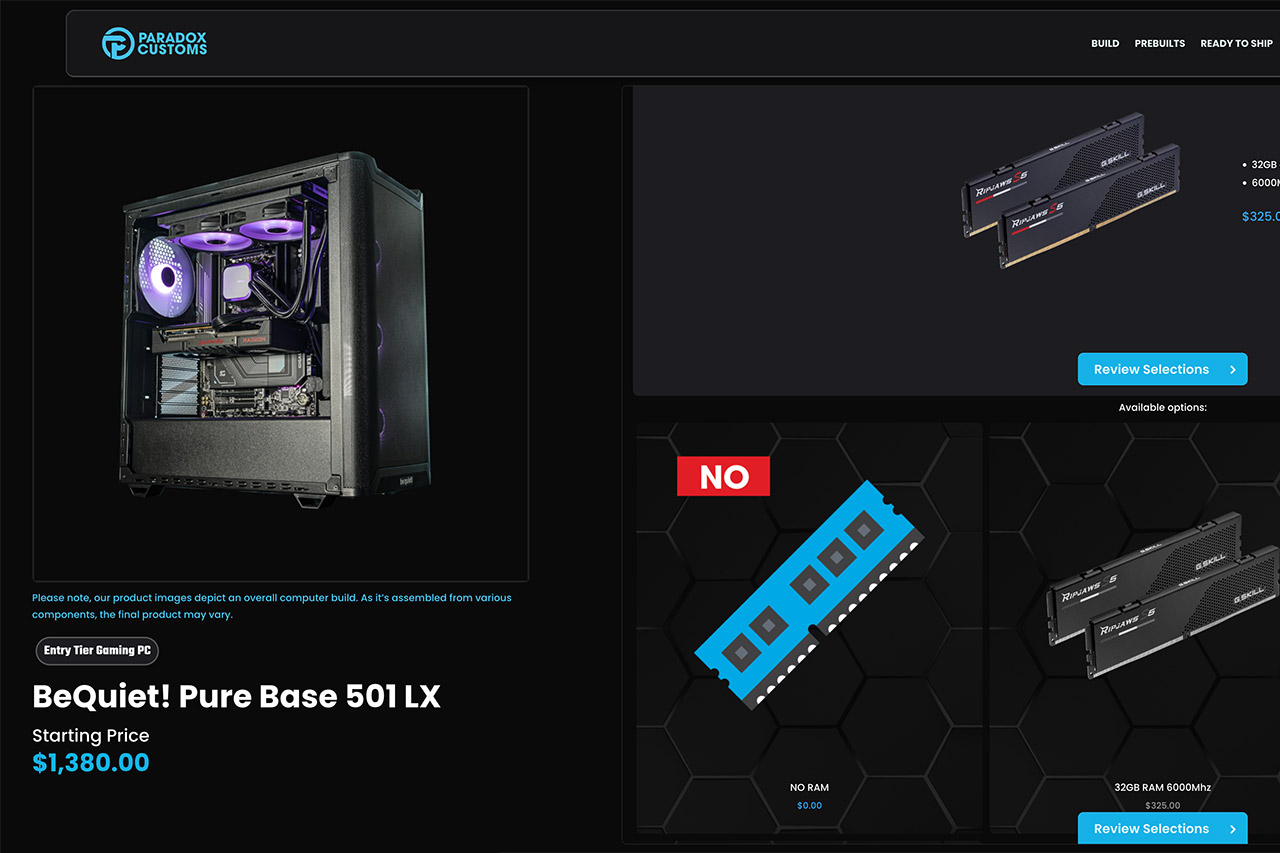

Paradox Customs Takes Bold Step By Offering Prebuilt PCs Without RAM Paradox Customs Prebuilt Pc No Ram . Paradox Customs Media. Paradox Customs 2022 Highlights R Brparadox Paradox Customs 2022 Highlights V0 5xVaLaeyY